Showing posts with label liberty. Show all posts

Saturday, January 1, 2022

THE NATIONAL CONSERVATIVES, A DEBATE

THE NATIONAL CONSERVATIVES, A DEBATE

BY PAUL MIRENGOFF IN CONSERVATISM, HISTORY, NATIONALISM

In this post, I discussed “national conservatives” and their movement (if one can call it that), “common good conservatism.” The New Criterion devotes a large part of its current issue to a debate on the subject.

Not all of the contributions are accessible to non-subscribers. However, a good many are. In this post, I will present two critiques of national conservatives and common good conservatism. I’ll present some entries on the other side of the debate in a follow-up post.

First, here is the useful introduction by our friend Roger Kimball, the editor and publisher of the New Criterion. As he points out, the starting point in the New Criterion debate is an article by Kim Holmes called “The fallacies of the common good.” Holmes is the former Executive Vice President of The Heritage Foundation and former Assistant Secretary of State for International Organizations in the G. W. Bush Administration. His article is here.

Some national conservatives argue that their vision is embedded in the Constitution. They espouse what they call a “common good originalism,” arguing that the American founders were not really Lockean believers in intrinsic rights, but Burkeans who saw rights as instrumental — a means to an end.

Thus, the argument goes, conservatism “rightly understood” is “more open to wielding state power” and, when need be, is willing to “enforce our order” or even to “reward friends and punish enemies (within the confines of the rule of law).”

Whatever the merit of this enterprise, I think Holmes does a good job of arguing that it isn’t what the American founders had in mind. He writes:

Put simply, the founders were not Burkeans. Yes, they welcomed Burke’s support for the American Revolution from his British Whig perspective, but it was John Locke who moved them philosophically more than Edmund Burke.

Secondly, the founders shared Locke’s notion of natural rights being grounded in the universal claims of natural law. That is why Jefferson and the other founders believed rights were “unalienable.” That is why they were “equal.” Such rights were universal, and not particular to a certain people or custom—as they would have to be if they were Burkean or nationalistic. . . .

The founders did have a strong notion of the common good, but they did not seek to reify it in government or to enforce it top-down on the social order.

Holmes also takes on a different strand of common good conservatism, the view that rejects natural-rights philosophy as at odds with the tenets of natural law. Those of this persuasion look not to Burke, but to Aristotle and Thomas Aquinas.

Again, whatever the merit of this position as a philosophical matter, I think Holmes effectively shows that it has little to do with our Constitution.

As to the merits of common good conservatism, Holmes issues this warning:

[T]he more successful the current common-good movement is, the more it will erode one of the key pillars of American conservative thought: the idea of liberty. The biggest danger is not that America will evolve into national or imperial socialism, but that statist arguments from conservatives will end up reinforcing similar arguments made by progressives.

Politics would devolve into a bidding war on which side, the Right or the Left, can buy the most votes with government handouts, win the most battles in the courts over defending “their” version of free speech, control the courts and administrative elites, or get to define what industrial and administrative policies mean. In that battle, I would put my money on the political masters of collectivism, the progressives, because that is their raison d’ĂȘtre.

(Emphasis added)

Charles Kesler contributes to the New Criterion’s debate with this piece. Kesler finds fault with some of Holmes’ points, but rejects the arguments of the two strands of common good conservatism Holmes attacks.

He concludes:

Holmes’s essay performs an important service by emphasizing and clarifying the degree to which these two emerging schools of the new conservatism are out to “undermine and ultimately overturn traditional American conservatism.” Though not every adherent has that in mind, most of them do, I think. And they enjoy patting themselves on the back for it. They underestimate, in my opinion, the extent to which Buckley and Reagan’s conservative movement was itself a counterrevolution against the liberal revolutions that had swept over America in the preceding decades. . . .

The Buckley and Reagan of, say, 1965 would. . . probably feel the need to freshen and reformulate the conservative cause to meet our changed political circumstances. . . .

I have no objection to today’s new conservatives seeking to divide today’s conservative movement—so long as they remember the point is ultimately to reunite and enlarge it along stronger and wiser lines. To do that, however, they will need better arguments.

 https://www.powerlineblog.com/archives/2021/12/the-national-conservatives-a-debate.php

Sunday, July 4, 2021

Our Sacred Honor: Reflections on the Fourth of July

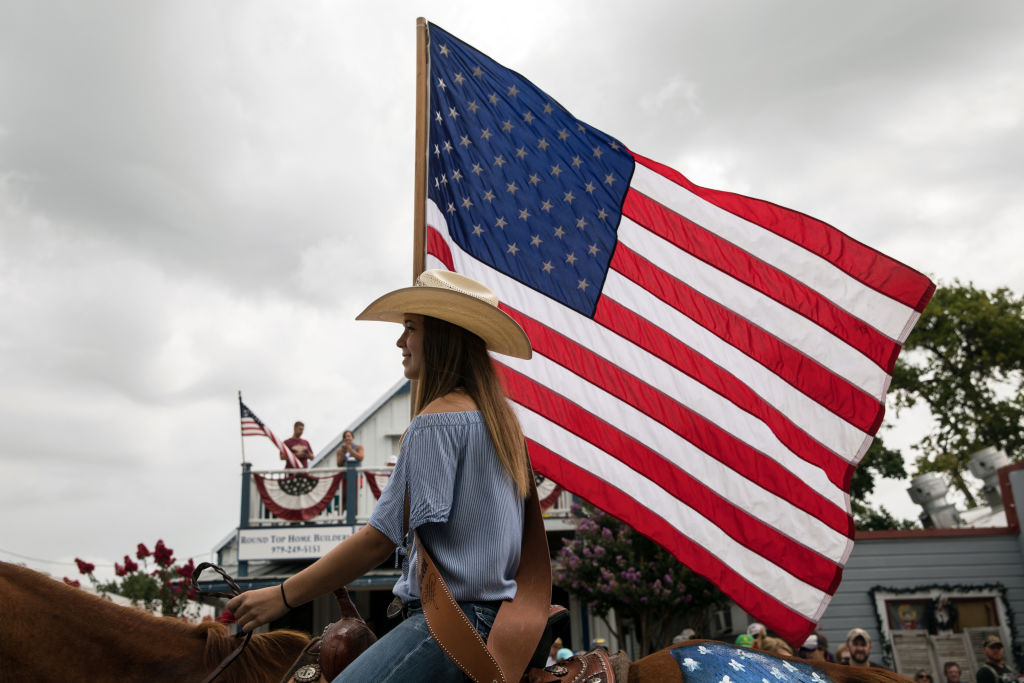
ROUND TOP, TX - JULY 04: Kaitlyn Tarnoswki, 14, carries an American flag while riding a horse during the 168th annual Round Top Fourth of July Parade on July 4, 2018 in Round Top, Texas. The Round Top community's Fourth of July celebration started in 1851 and is known as the longest running Fourth of July celebration west of the Mississippi. (Photo by Tamir Kalifa/Getty Images)

Our Sacred Honor: Reflections on the Fourth of July

The place: Philadelphia. The time: June 1776.

The Continental Congress appoints a Committee of Five—Benjamin Franklin of Pennsylvania, Roger Sherman of Connecticut, Robert Livingston of New York, Thomas Jefferson of Virginia, and chairman John Adams of Massachusetts—to draw up a declaration of independence from Britain. Though John Adams seems the natural choice to write the initial draft of this document, he defers to the Virginian for several reasons, telling Jefferson by his own account, “You can write ten times better than I can.”

The committee agrees with Adams, and Jefferson takes up his pen.

On July 2, Congress votes to declare America’s independence from Great Britain, a date that Adams believes will be forever remembered. In a letter written to his wife Abigail on July 3, Adams asserts: “The second day of July 1776, will be the most memorable Epocha, in the History of America. I am apt to believe that it will be celebrated, by succeeding Generations, as the great anniversary Festival.”

Adams is mistaken.

On July 3 and 4, Congress debates the declaration presented them by the committee, making changes in the wording. To avoid offending some of the Southern members of the Congress, for example, they strike out Jefferson’s charge blaming the English monarchy for the importation of slaves into the colonies.

On the evening of July 4, Congress approves the document we now call the Declaration of Independence. Over the next days and weeks, members will sign the document, knowing that by doing so they are possibly signing their own death warrants as rebels against King George III.

Despite the alterations made by Congress, one of Jefferson’s passages is left untouched:

“We hold these truths to be self-evident, that all men are created equal, that they are endowed by their Creator with certain unalienable Rights, that among these are Life, Liberty and the pursuit of Happiness.”

The Creed

Jefferson’s words lie at the heart of the American Creed.

Near the beginning of his latest book, “Facing Reality: Two Truths About Race in America,” Charles Murray favorably cites fellow writer Samuel Huntingdon’s definition of this creed: “the political principles of liberty, equality, democracy, individualism, human rights, the rule of law, and private property.”

For more than 200 years, these principles have served as the bedrock of our American Republic. We have struggled to live up to these ideals, fighting a Civil War, for instance, to put an end to slavery, and nearly a century later, battling to ensure that the descendants of those slaves achieved equality under the rule of law. Women also fought for and won the right to vote and for other rights as well. Human rights remain paramount concerns both in this country and abroad, and our emphasis on the individual and freedom is demonstrated in a myriad of court actions over the course of our history.

It’s this creed that has drawn so many immigrants to our shores. The numbers of Europeans who processed through Ellis Island in the late 19th century came not only to enjoy the bountiful gifts of this country and its free enterprise system, but also to follow their dreams and breathe the air of liberty.

Freedom Breeds Prosperity

That creed, first envisioned by Jefferson and which might also go under the name of the American Dream, brought us prosperity and numerous privileges: the right to vote in elections, the right to a fair trial, the right to protest injustices, the right to go our own way for better or for worse. We may forget this Dream and its many benefits in the day-to-day exigencies of life, but it’s what has allowed us to live as we do.

And that liberty accounts for the great achievements of some of our citizens. Henry Ford’s mass production of the automobile, Thomas Edison’s electric lights, Silicon Valley’s computers and phones, the writers, painters, musicians, and filmmakers who practice their arts without fear of government censorship, the scientists who have discovered everything from cures for polio to improved methods of agriculture: all of these people accomplished these things because they possessed the freedom to do so.

The same holds true for the rest of us. Here in America, we still possess the wonderful opportunity to make of ourselves what we will, to go as far as we can, to develop our own businesses. Around me, I see young adults operating their own construction companies, running restaurants and website businesses, practicing law, working as nurses and doctors. Others of their own volition enter college or the trades, free to succeed or to fail as they will.

The Price of Liberty

The American Dream comes with a price tag.

On Memorial Day, we remember those who died for their country in our various wars. On Veterans Day, we honor those who served their country in uniform.

On Independence Day, we might do well to remember our predecessors who also sacrificed themselves for our benefit. The wealthy surgeon who sends his children off to the best universities is the son of a successful owner of a car dealership, who, in turn, is the son of an immigrant tailor in Brooklyn. The surgeon’s wife grew up in an affluent home, but her great-grandmother lost her father to death when she was 12, dropped out of school, and worked a variety of jobs to help her mother make ends meet.

Then there are the volunteers who helped forge our country. The Fourth of July is the perfect time to remember with gratitude those who even today give of their time and treasure to help others: the mechanic who finds time on the weekends to work in a food bank, the busy mom who volunteers at her children’s school, the retiree who plays the piano twice a week to entertain residents in a nursing home.

Nearly 250 years ago, a small band of prominent men vowed “to pledge to each other our Lives, our Fortunes and our sacred Honor.” Knowing that the consequences of that pledge might mean death by execution and the ruination of their families, these men did not take this oath lightly. Yet they were willing to give up everything, including their lives, for the cause of liberty.

We should treasure our freedoms and our rights, but if we forget that the foundation stones of these privileges are sacrifice, duty, and self-responsibility, liberty will die.

Patriotism and Celebration

Like the United States, many countries around the world set aside a day to celebrate their country. Canadians, for example, have their Dominion Day, and Australians honor their country on Australia Day.

This patriotism is a positive good. Some equate patriotism with nationalism, but the two are quite different. The patriot loves and honors his country; the nationalist believes his country is superior to other countries. A patriot values his patch of earth, the people who live there, and the ideals upon which his country was founded. He has little interest in comparisons with other countries, any more than he would put his beloved mother into a competition against other moms.

To celebrate our patriotism here in America, we host backyard barbecues, head for the beach, plant American flags in the front yard, and shoot off fireworks. My wife used to dress our small children and herself in red, white, and blue for the day, and put out small flags along the front sidewalk of our house. Some of us may talk to our children about the American past or the Declaration; others may scarcely think of the holiday itself while they are grilling hamburgers or popping off bottle rockets. Whatever the circumstances, like those patriots of old who rang church bells and lighted bonfires to celebrate the Fourth of July, we are commemorating our liberties and our heritage.

When we celebrate the Fourth of July, we are observing more than our break with the British and the creation of our American nation. We are paying homage to one of the most remarkable documents in human history, to the venerable and universal proclamation of our Declaration of Independence—that human beings are all created equal, that by their very creation they possess certain inviolable rights, and that these truths are “self-evident.” To those Founding Fathers such as Jefferson, Adams, and the rest, humanity—not just Americans—owes a debt of gratitude for these words alone.

Let me close with a remarkable story that seems closer to legend than to fact, but which is nonetheless true.

On July 4, 1826, exactly 50 years to the day after Congress adopted the Declaration of Independence, Jefferson and Adams died. That remarkable circumstance brings chills every time I remember it. What are the odds of these two men crossing the bar on the same day and on such an anniversary? What are the chances of that?

And yet it happened.

The last words spoken by Adams were “Thomas Jefferson still lives,” but Adams was wrong. His friend and sometime opponent Jefferson had taken his last breath five hours earlier at his home in Monticello.

But the words of Jefferson lived and should live still in the hearts and minds of patriots everywhere.

As we Americans celebrate Independence Day this year, let’s be grateful for the republic those men gave us. More importantly, let’s resolve to keep that republic alive.

https://www.theepochtimes.com/mkt_morningbrief/why-the-epoch-times-is-defending-america_3885768.html?utm_source=Morningbrief&utm_medium=email&utm_campaign=mb-2021-07-04&mktids=0ecc5213d1bdf8f0029d75afd5d003e8&est=NaaXcIm8szkOpN2xqU22H8LiYbWV%2F0m4bsFPTF%2FCJdCnzkY8bV3u2I9jOtkt

Saturday, October 3, 2020

New Poll Says ‘Temporary Safety’ Is Kicking ‘Essential Liberty’s’ Butt


New Poll Says ‘Temporary Safety’ Is Kicking ‘Essential Liberty’s’ Butt

AP featured image
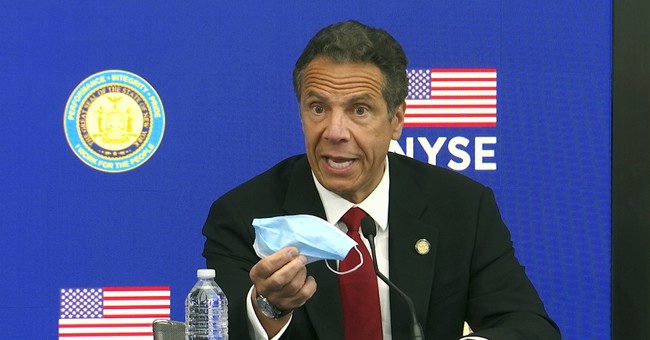
New York Gov, Andrew Cuomo holds his face mask while talking to the media at the New York Stock Exchange, Tuesday, March 26, 2020. Gov. Cuomo rang the opening bell as the trading floor partially reopened during the coronavirus pandemic. (AP Photo/Ted Shaffrey)

 
One thing the ongoing pandemic panic is showing us is just how incredibly fragile our liberties are when confronted by political players willing to use the color of science and pseudo-science to curtail our ability to exercise rights guaranteed to us by the US Constitution.

Across the nation, we’ve seen governors and mayors enact arbitrary rules and regulations controlling the circumstances under which you can leave your home, how many visitors you can have, requiring you to sit on the sand rather than a chair, etc., etc., all under the shabby pretense of protecting us from the dreaded Wuhan virus, or China virus in the terminology of President Trump. These rules and regulations have all been promulgated by people who a) are not elected, b) not accountable, and c) who seemingly don’t know their ass from a hot rock.

More troubling is we’ve seen police forces arrest parents in front of their children for being on an empty playground, we’ve seen a mother tased for not wearing a face diaper and a high school sports event by a police officer who was not wearing one but who didn’t tase himself, we’ve seen high ranking public officials move their own parent out of a nursing home as they were signing an order requiring nursing homes to accept Wuhan virus patients, and we’ve even seen the Supreme Court agree that a governor can close churches while keeping casinos open.

The question, for me, comes back always to “how long will Americans put up with the tyranny of fearmongers? The answer appears to be “quite some time.” This from the Washington Post: New survey: Yes, Americans will give up liberties to fight the coronavirus:

Our Web-based survey was distributed by Qualtrics nationwide from Aug. 7 to Sept. 7. Quotas based on race, gender, age and census statistical division, matched to 2018 Census estimates, were put in place to ensure a demographically and geographically representative sample. Respondents were presented with either/or policy choices that explicitly emphasized public health and civil rights trade-offs, giving us a window into public opinion about what sacrifices are appropriate.

Specifically, we asked whether the government should be able to:

· Require people to wear masks in public — or not, out of respect for personal freedom

· Close nonessential businesses — or not, out of respect for economic freedom

· Require people to cooperate with contact tracers — or not, out of respect for the right to privacy

· Require people to stay at home — or not, out of respect for freedom of movement

· Restrict religious gatherings — or not, because of religious freedom

· Restrict public demonstrations — or not, because of freedom of speech and assembly

· Suspend asylum and refugee admissions — or not, protecting human rights

· Use cellphone data to track the movement of people who test positive for the coronavirus — or not, given a right to privacy.

Respondents overwhelmingly and consistently agreed the government should be able to place restrictions and requirements on businesses and people to protect public health.

I’m going to quote more text that I ordinarily would but the absence of any link to an actual document prevents it. The survey asked about support for eight specific policies: mandatory mask-wearing; shut down businesses; mandate cooperation with contact tracers; mandatory stay-at-home; curtail religious services; restrict demonstrations; restrict asylum, and give the government access to cell phone data.

As you can see in the figure below, 69.4 percent to 78.3 percent of our respondents support the government’s right to implement six of the eight proposed policies. Only 60 percent support policies designed to restrict asylum and refugee programs. The majority (58.3 percent) rejected only one proposed policy: using cellphone data to track infected people, a method primarily deployed in other countries.

There was also a link to Trump:

Not surprisingly, individuals’ party affiliations affect which policies they support. On average, Democrats support 74.2 percent of the listed policies; Republicans support 61.5 percent; Libertarians support 52.1 percent; independents, 68 percent; and those affiliated with other parties, 61.3 percent. However, as you can see in the figure below, whether respondents approve of President Trump’s job performance moderates the effect of party affiliation for Republicans, Democrats, independents, and libertarians. Across party lines, those critical of the president are more likely to favor limits on rights and freedoms to protect public health. Accordingly, Republicans critical of Trump are more supportive of restrictive policies than Democrats who approve of his performance. In other words, Trump support trumps partisanship.

On the one hand, the poll appears to be largely crap. The fact that they don’t mention the number of surveys sent out, response rate, etc. is a hint that they don’t want their work too closely examined.

Having said that, outside of a few flashes of independence, as a nation we’ve been totally supine as our liberties have been stripped away in the service of defeating a virus that is highly survivable:

On the eve of the French and Indian War, Benjamin Franklin gave a speech in the Pennsylvania legislature that has become famous. “Those,” he said, “who would give up essential liberty to purchase a little temporary safety, deserve neither liberty nor safety.” In this case, Franklin was telling Scots Irish settlers on the frontier to suck it up and deal with Indian raids because the political skirmish he was having with the Penn proprietors was the real important issue.

Our dilemma is much worse. We are sacrificing essential liberties, like assembly, and worship, and the ability to go to your father’s funeral without ending up jailed, for nothing. Not. A. Single. Thing. If we accept that, we deserve whatever the multi-degreed sociopaths in lab coats dole out to us.

https://www.redstate.com/streiff/2020/10/01/932503/

Friday, October 12, 2018

Donald Trump: Democrats 'Medicare for All' plan will demolish promises to seniors

Donald Trump: Democrats 'Medicare for All' plan will demolish promises to seniors

The Democrats want to outlaw private health care plans, taking away freedom to choose plans while letting anyone cross our border. We must win this.

LINKEDINCOMMENTMORE
Throughout the year, we have seen Democrats across the country uniting around a new legislative proposal that would end Medicare as we know it and take away benefits that seniors have paid for their entire lives.
Dishonestly called “Medicare for All,” the Democratic proposal would establish a government-run, single-payer health care system that eliminates all private and employer-based health care plans and would cost an astonishing $32.6 trillion during its first 10 years. 
As a candidate, I promised that we would protect coverage for patients with pre-existing conditions and create new health care insurance options that would lower premiums. I have kept that promise, and we are now seeing health insurance premiums coming down.
I also made a solemn promise to our great seniors to protect Medicare. That is why I am fighting so hard against the Democrats' plan that would eviscerate Medicare. Democrats have already harmed seniors by slashing Medicare by more than $800 billion over 10 years to pay for Obamacare. Likewise, Democrats would gut Medicare with their planned government takeover of American health care.

The Democrats' plan threatens America's seniors

The Democrats' plan means that after a life of hard work and sacrifice, seniors would no longer be able to depend on the benefits they were promised. By eliminating Medicare as a program for seniors, and outlawing the ability of Americans to enroll in private and employer-based plans, the Democratic plan would inevitably lead to the massive rationing of health care. Doctors and hospitals would be put out of business. Seniors would lose access to their favorite doctors. There would be long wait lines for appointments and procedures. Previously covered care would effectively be denied.
In practice, the Democratic Party’s so-called Medicare for All would really be Medicare for None. Under the Democrats' plan, today’s Medicare would be forced to die.
The Democrats' plan also would mean the end of choice for seniors over their own health care decisions. Instead, Democrats would give total power and control over seniors’ health care decisions to the bureaucrats in Washington, D.C.
The first thing the Democratic plan will do to end choice for seniors is eliminateMedicare Advantage plans for about 20 million seniors as well as eliminate other private health plans that seniors currently use to supplement their Medicare coverage.
Next, the Democrats would eliminate every American’s private and employer-based health plan. It is right there in their proposed legislation: Democrats outlaw private health plans that offer the same benefits as the government plan. 
Americans might think that such an extreme, anti-senior, anti-choice and anti-consumer proposal for government-run health care would find little support among Democrats in Congress.
Unfortunately, they would be wrong: 123 Democrats in the House of Representatives — 64 percent of House Democrats — as well as 15 Democrats in the Senate have already formally co-sponsored this legislation. Democratic nominees for governor in Florida, California and Maryland are all campaigning in support of it, as are many Democratic congressional candidates.

Democrats want open-borders socialism

The truth is that the centrist Democratic Party is dead. The new Democrats are radical socialists who want to model America’s economy after Venezuela.
If Democrats win control of Congress this November, we will come dangerously closer to socialism in America. Government-run health care is just the beginning. Democrats are also pushing massive government control of education, private-sector businesses and other major sectors of the U.S. economy. 
Every single citizen will be harmed by such a radical shift in American culture and life. Virtually everywhere it has been tried, socialism has brought suffering, misery and decay.
Indeed, the Democrats' commitment to government-run health care is all the more menacing to our seniors and our economy when paired with some Democrats' absolute commitment to end enforcement of our immigration laws by abolishing Immigration and Customs Enforcement. That means millions more would cross our borders illegally and take advantage of health care paid for by American taxpayers.
Today’s Democratic Party is for open-borders socialism. This radical agenda would destroy American prosperity. Under its vision, costs will spiral out of control. Taxes will skyrocket. And Democrats will seek to slash budgets for seniors’ Medicare, Social Security and defense.
Republicans believe that a Medicare program that was created for seniors and paid for by seniors their entire lives should always be protected and preserved. I am committed to resolutely defending Medicare and Social Security from the radical socialist plans of the Democrats. For the sake of our country, our prosperity, our seniors and all Americans — this is a fight we must win.
Donald J. Trump is the president of the United States. Follow him on Twitter: @realDonaldTrump

Tuesday, October 2, 2018

5 Signs You’re In The Midst Of A Moral Panic

5 Signs You’re In The Midst Of A Moral Panic

Protestors demonstrate outside the Montgomery County Courthouse as Bill Cosby arrives for the first day of his sexual assault retrial on April 9, 2018 in Norristown, Pennsylvania.
Mark Makela/Getty Images
Moral panics, or instances of mass hysteria, have occurred throughout history. Two of the most notorious are the Salem Witch Trials of the 1690s and the Satanic Panic of the 1980s and '90s. The panics almost exclusively involve women and children and fears for their safety, especially from sexual abuse.
We are in the midst of another such panic, but despite the similarities to past episodes, we are still unable to recognize it as such. The current panic has been playing out in the military and on college campuses for nearly a decade, but with the advent of the #MeToo movement, the mass hysteria is creeping into our regular legal system as well. The following are five of the biggest signs that we are experiencing another bout of mass hysteria, this time over sexual assault and harassment.
1. Due Process Goes Out The Window
Due process is the cornerstone of our legal system, but in times of mass hysteria, it becomes the enemy. In Salem, those accused of witchcraft were presumed guilty and, in many cases, denied counsel. The only evidence presented against them was an accusation.
This was similarly the case during the Satanic Panic several decades ago. The only evidence presented against the accused were allegations from children, who alternated between plausible claims of sexual abuse (which lacked even limited physical evidence) to fanciful claims of Satanic ritual killings. Children who attended the Little Rascals day care in Edenton, North Carolina, for example, made accusations that they were taken out to the ocean and thrown overboard for sharks. Children at the McMartin Preschool claimed to travel to outer space in a hot-air balloon. These allegations, of course, were ignored while the accusations of sexual abuse were pursued.
Those accused at the time were considered “guilty until proven innocent.” Suggesting that evidence be weighed, or due process be followed, was met with scorn from those who insisted the accused were guilty. In his lengthy article for The New Yorker, Lawrence Wright followed a case of alleged sexual abuse and satanic ritual in Thurston County, Washington. The Under-Sheriff for the county, Neil McClanahan, said: “Our survivors are very traumatized. To question their credibility would cause them to be re-traumatized. They’re so fragile.”
We see this same claim being made now on college campuses. The Obama administration strongly discouraged cross-examination of students claiming to be sexual assault victims because allowing their alleged abuser (or his counsel or anyone else) to question them would “re-traumatize” them. Legal counsel for college students is often denied, and if an attorney is allowed in the hearing, they are barred from offering guidance or speaking on behalf of their client. Many students aren’t even provided the specific allegations against them before they’re told to defend themselves. Often, only campus investigators’ biased notes exist of interviews, instead of audio or video. This was also the case in the Little Rascals trial — only therapists' notes survived.
We’re now told, quite firmly, that due process keeps sexual assault victims from coming forward. Having to tell their story multiple times, having to face their accuser, having to provide evidence of their claims, being questioned about inconsistencies or fallacies — all these things are now considered harmful, but only for those making sexual assault accusations. Accusers of other crimes are still seen as capable of surviving the legal system.
2. “Believe The Victim”
This may be the biggest tell of a moral panic. An accusation, we’re told, is sufficient enough. With due process being considered anathema to victims, accusations are all the evidence needed. During the Little Rascals case in North Carolina, some jurors didn’t believe the accusations, but during deliberations were bullied by other jurors if they didn’t believe the children.
Parents of children involved in the Little Rascals case told Frontline: “No child would lie about something like this.” In Wright’s article about the Ingram case in Washington, he wrote:
“These two hypotheses form the intellectual frame of the Ingram investigation: first, that the depth of the repression is a function of the intensity of the trauma; and, second, that victims must be believed. Once a victim’s account is believed, the evidence in a case may be stretched to fit it. Often, it’s a big stretch.” Paul Ingram himself said of his daughters, who made the accusations against him: “They wouldn’t lie about something like this.”
During the McMartin preschool episode, parents formed a group called “Believe the Children,” even though no evidence of the alleged abuse existed.
Today, we hear “believe all women” or “believe the victims.” Politicians such as former Vice President Joe Biden and former Secretary of State Hillary Clintonrepeat this phrase. Sen. Kirsten Gillibrand (D-NY) uses some form of this phrase a lot, even when no evidence exists.
They are not actually saying we should believe victims, because if we knew someone was a victim, we would know they’re telling the truth. What politicians and celebrities who use this phrase are actually saying is to believe every accusation. It is dangerous, and in high-profile case after high-profile case, they have been proven wrong; Duke Lacrosse and the Rolling Stone rape hoax being the most obvious.
3. Misleading And Faulty Statistics
In times of mass hysteria, people try to justify gutting due process by claiming the alleged problem — sexual abuse — is widespread and using statistics to back it up. But these statistics are not evidence and often the result of shoddy research or cherry-picked and misrepresented for effect.
Multiple surveys were created during the Satanic Panic. One limited survey conducted by psychologist Richard Peterson, who worked with police during Paul Ingram’s investigation, found about 25% of therapists in Tacoma and Seattle had treated alleged victims of satanic abuse. A survey from the American Psychological Association conducted in 1991 found that 30% of respondents had treated someone alleging ritual abuse, and 93% of those said in a follow-up survey that they believed the claims.
Another social panic, this one about child abductions and occurred around the same time as the Satanic Panic, used a grossly exaggerated figure to suggest children across the country were in danger of being kidnapped. The media and others claimed 50,000 children were abducted a year, when the actual number was around 600 (still frightening, but far from 50,000).
In today’s sex assault panic, we see multiple inflated statistics allegedly confirming an epidemic. We’re told that 20% of female undergrads, and 33% of women in the U.S. total, have experienced sexual assault. We’re told false accusations are rare (even though the statistic pertains to proven false allegations, which are difficult to conclude) and therefore the vast majority are true. The truth is that there are a range of categories for accusations, a small percentage are proven false, and a small percentage result in a guilty verdict. Everything in between is uncertain.
4. Evidence, Schmevidence
As due process goes out the window, so does the need for evidence. During these times of mass hysteria, things that would otherwise be considered evidence that a crime was not committed or that an accuser is lying in any other situation are dismissed as evidence of the crime itself.
In the Paul Ingram case, as doubts began to mount about his guilt, his daughter Julie presented a threatening letter addressed to her allegedly from her father. Detectives quickly recognized the handwriting as Julie’s own, but Under-Sheriff McClanahan insisted this forgery was evidence of the trauma Julie had endured and insisted this behavior was typical of victims like her.
Prosecutors also attempt to withhold evidence in high-profile cases that fall in line with moral panics. In the McMartin trial, district attorneys withheld a letter written by the original accuser, Judy Johnson, who was the mother of one of the children. The letter claimed that, in addition to physical abuse, the child was taken to see a “goatman,” and that one of the McMartin’s had “drilled a child under the arms.” In Ingram’s case, prosecutors attempted to withhold a report written by an expert they had brought in, psychologist Richard Ofshe, who had questioned the accuser’s claims. Prosecutors initially refused to turn this report over to the defense, claiming it was not real evidence, but were ultimately ordered to comply.
In today’s sexual assault panic, the dismissal of exculpatory evidence runs rampant. On college campuses, accusers who continue to socialize with men they later accuse of sexual assault and who sent flirtacious and friendly text messages are said to be showing signs of trauma. When Emma Sulkowicz (better known as “Mattress Girl”) accused a man of violently raping her, but continued to reach out to him and make plans to see him, she was allowed to explain that away as wanting to “talk” to him about the rape. At Vassar College, a female accuser told a man with whom she had sex that she had a “wonderful time” and apologized for leading him on. But once she accused him, she said those messages “did not correctly reflect her feelings” because she was in “shock and disbelief” about the sexual encounter. The Vassar student was expelled.
When witnesses contradict the accuser’s claims, they’re dismissed in favor of other witnesses — often friends of the accuser who were not actually present during the encounter — who claim she was distraught afterwards. When accusers admit they “may have stretched the truth” and only made the accusation because they were “pissed off” at the man they accused, they’re still considered victims and such statements are disregarded.
There is absolutely nothing an accused person can present that would actually be considered exculpatory. Meanwhile, any and all evidence just reinforces the accuser’s trauma and truthfulness.
5. Pseudo-Scientific Theories About Memory Reign Supreme
The science of memories always pops up during moral panics. During the Satanic Panic, child psychologists claimed children who didn’t remember the sexual abuse were repressing those memories. The psychologists simply needed to coax those memories out, but in the process they actually implanted false memories into the children by inadvertently bullying them into making outrageous claims.
In the Ingram case in Washington, even Paul Ingram was made to believe he was repressing memories — both of the abuse he committed and childhood abuse committed against him.
On college campuses, therapists, friends, and school administrators help corrupt accuser’s memories (which are often foggy due to alcohol) by telling them that a drunken hook-up was actually sexual assault. Once the idea is implanted, an accuser fills in the gaps in their memory with the idea that they must have been sexually assaulted, and interpret consensual acts in that way.
We also now see trauma “experts” insisting that everything is evidence of trauma and making claims that contradict other claims. We’re told that trauma makes memories more vivid, or that it can block out certain memories. We’re told that the closer to an event, the better someone remembers, while also being told that memories become clearer long after an event occurred.
In reality, none of this can be used to guarantee whether an accuser is being truthful or making a 100% accurate claim.
A traumatic experience does not create a factually accurate memory, as many suggest. These memories can be distorted in multiple ways. New details can be introduced through intentional or unintentional remembering and can then be absorbed into the original memory without the person realizing these details never happened. Remembering trauma can also make it more intense than it actually was.
A large volume of studies — spanning decades — consistently show that our memories are not a reliable source of information, and can be corrupted and distorted incredibly easily. Witnesses to traumatic events — such as those who witness a shooting or other horrific crime — are often wrong about what they saw. Thousands are wrongfully convicted based on incorrect eyewitness identifications.
Yet still, we’re told that accusations must be believed and that no one would lie about this sort of thing. Many people may not be lying, but simply misremembering something and believing that incorrect memory.