Sunday, February 3, 2019

CNN’s Kaczynski Deletes Tweet About Kamala ‘Backtracking’ After Campaign Pushes Back
CNN’s Kaczynski Deletes Tweet About Kamala ‘Backtracking’ After Campaign Pushes Back

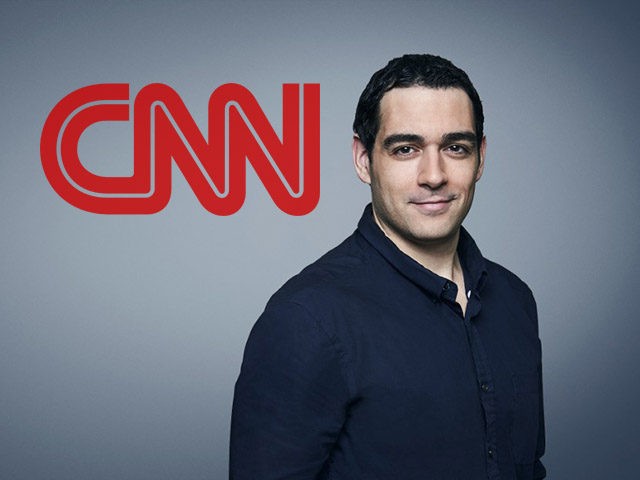
CNN's "KFILE" publisher Andrew Kaczynski.
CNN
722
2:55

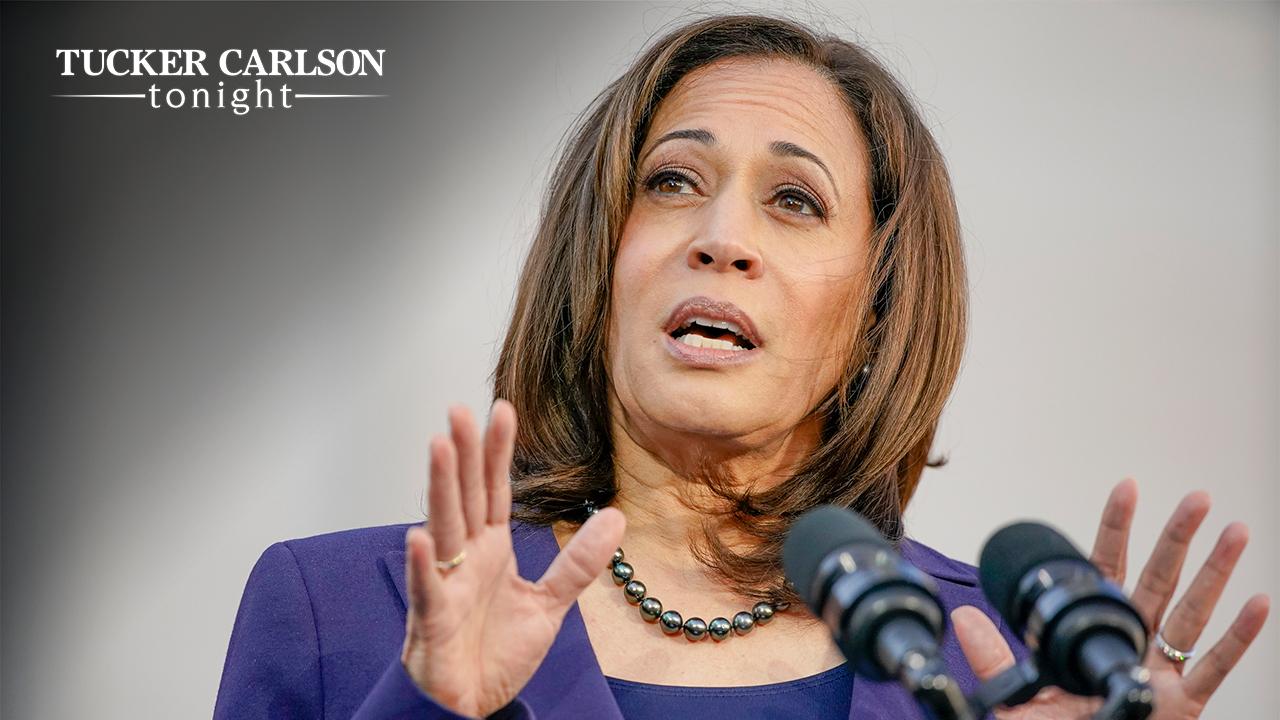
After getting pushback from Sen. Kamala Harris’s (D-CA) campaign, CNN’s Andrew Kaczynski on Tuesday evening deleted an accurate tweet about how Harris backtracked on her call to “eliminate” private health insurance and provide Medicare for all.

At Monday’s CNN’s town hall event in Iowa, CNN host Jake Tapper explicitly asked Harris if people who like their insurance will lose their private insurance under her Medicare-for-all proposal.
Harris replied:
Well, listen, the idea is that everyone gets access to medical care, and you don’t have to go through the process of going through an insurance company, having them give you approval, going through the paperwork, all of the delay that may require. Who of us has not had that situation, where you’ve got to wait for approval, and the doctor says, well, I don’t know if your insurance company is going to cover this? Let’s eliminate all of that. Let’s move on.
After getting backlash from even fellow Democrats, Harris’s camp tried to walk back her remarks on Tuesday evening, with her press secretary Ian Sams telling CNN: “Medicare-for-all is the plan that she believes will solve the problem and get all Americans covered. Period… She has co-sponsored other pieces of legislation that she sees as a path to getting us there, but this is the plan she is running on.”
Kaczynski, linking to his network’s scoop about Harris’s backtracking, initially tweeted: “NEW: Kamala Harris is backtracking on her calls to eliminate all private health insurance in supporting Medicare for all, with an advisor and her spokesman saying she’s open to more moderate plans preserving the private health insurance industry.”
After getting pushback from Harris’s campaign, he said he was deleting his original tweet “because multiple Harris campaign spokespeople would like it clarified. Harris said at CNN’s town hall she supports eliminating private health insurance. Her campaign advisor would like to emphasize she’s also open to bills that [preserve] private health care.”
Here’s CNN’s transcript of the exchange:
TAPPER: So just to follow up — so just to follow up on that, and correct me if I’m wrong, to reiterate, you support the Medicare for all bill, I think…
HARRIS: Correct.
TAPPER: … initially co-sponsored by Senator Bernie Sanders. You’re also a co-sponsor onto it. I believe it will totally eliminate private insurance. So for people out there who like their insurance, they don’t get to keep it?
HARRIS: Well, listen, the idea is that everyone gets access to medical care, and you don’t have to go through the process of going through an insurance company, having them give you approval, going through the paperwork, all of the delay that may require. Who of us has not had that situation, where you’ve got to wait for approval, and the doctor says, well, I don’t know if your insurance company is going to cover this? Let’s eliminate all of that. Let’s move on.
TAPPER: All right. Let’s go to the next question.
Kaczynski was quick to delete a tweet that made Harris look bad, but CNN personalities like Jim Sciutto have left up “fake news” tweets about President Donald Trump’s administration on numerous occasions.

Saturday, February 2, 2019

Tucker Carlson: Roger Stone raid shows that CNN is no longer covering Robert Mueller. They're working with him

Tucker Carlson: Roger Stone raid shows that CNN is no longer covering Robert Mueller. They're working with him

LongtimeTrump adviser Roger Stone was arrested on Friday by federal agents and charged with seven felonies, none of which had anything to do with Russian collusion or election meddling. But you’d never know that from the penalties he faces.
If convicted, Stone could die in prison. Nobody in Washington seems to find that punishment excessive. Many have cheered it. Officially, Stone was charged with lying, something most of our political elite engage in every day. But his real crime was flamboyance. Stone has spent the last 40 years giving the finger to the people in charge. In the end, they got him – they always do.
Stone’s arrest is already fading from the headlines, replaced by the latest political crisis of the moment, or some new skirmish in the ongoing culture wars. Soon, we’ll forget it ever happened. But before we do, it is worth taking just a moment to consider a few basic questions about it, if only because nobody else is going to.
First, why did the Justice Department stage what was, in effect, a military assault on Roger Stone’s house? Stone himself asked that question on ABC over the weekend, but anchor George Stephanopoulos dismissed the DOJ tactic as "pretty standard."
“Pretty standard, as you know.” But is it “pretty standard” to send dozens of federal agents with rifles to arrest an unarmed 66-year-old man who has been charged with a nonviolent crime? No. It is not standard. It is shocking. And any honest person who pays attention could tell you that.
Roger Stone, who was there, says there were 29 agents on the scene, along with 17 vehicles, two of them armored, and a helicopter overhead. If that’s an accurate accounting, it means the feds sent more armed men to Roger Stone’s house in Fort Lauderdale than they did to Usama bin Laden’s compound in Pakistan -- just for some perspective on this.
So, what was the justification for doing that? Prosecutors knew perfectly well that Stone wasn’t a flight risk. He’s broke. He doesn’t even have a valid passport. They could have simply called his lawyer and told him to surrender. That’s the actual "standard" in cases like this. But they didn’t do that. Instead, they went in with guns drawn. Who decided to do that? How much did it cost taxpayers?
We’ve spent the last two days trying to answer those questions. It tells you a lot about contemporary America that we couldn’t - we still have no idea. The Justice Department wouldn’t answer us. The White House, which supposedly oversees the Justice Department, didn’t even respond. Maybe they don’t know the answer to those questions. It’s possible. They don’t control Special Counsel Robert Mueller. Nobody controls Robert Mueller.
Mueller can send armed men to your home to roust you from bed at gunpoint just because he feels like it, and there’s nothing you, or anyone else, can do about it. Mueller has an unlimited budget and no timetable. He doesn’t have to answer questions. He can do whatever he wants, whenever he wants, to whomever he wants. He cannot be fired.
Mueller is the single most powerful person in America, and yet nobody voted for him. He is a living rebuke to the principles of our democratic system. At the same time, our leaders tell us that we need Robert Mueller — an all-powerful, unelected prosecutor, accountable to no one — to protect us from threats to – brace yourselves here – democracy. Nobody in Washington catches the irony in any of this. Mueller himself is the threat to our democracy. The most powerful man elected by nobody.
Our media don’t ask questions about any of this, or even acknowledge that it is a question. They’ve chosen sides. Last Friday on "Tucker Carlson Tonight," Stone made the following observation: "It's disconcerting that CNN was aware that I would be arrested before my lawyers were informed. So, that's disturbing. If it was a dangerous situation, which would merit the SWAT team, well, then CNN's cameraman would be in danger. I don't know why they would be allowed to be there."
That’s a fair question, no matter who asks it. And many began asking it within minutes of Stone’s arrest Friday morning. How did CNN know about a raid that was supposed to be a secret? Did they learn from Mueller’s team?
CNN reacted angrily to the suggestion. We’re reporters, they said, not state media. We didn’t collude with the feds. We used reporter’s intuition.
On Sunday, CNN president Jeff Zucker dispatched his minions to bat down further questions.
"On the right, on the fringes of the right, a conspiracy theory spread about CNN or Robert Mueller, " said Oliver Darcy, CNN's senior media reporter. "They say this would be done to embarrass Roger Stone and to record his arrest to embarrass him. They're saying it was propaganda ... A lot of people, including mainstream commentators and journalists, started asking questions about this conspiracy theory and as journalists we have to be very careful not to allow bad faith actors to hijack the conversation and move the story away from what it really should be."
Save that tape. It’s one for the ages because it summarizes everything. So, to recap:  “We journalists” says CNN, need to fight back against the “fringes of the right” who want to “move the story away from what it should really be." CNN decides what it should really be. And if you don’t agree, you’re on the “fringes of the right.” In other words, shut up, you guys. Stop asking questions we don’t feel like answering.
But this show persisted, because that’s our job. We asked both CNN’s official spokesman and the kid you just saw playing media reporter a very simple question: Did Mueller’s office help you with your story. The response, of course, was feigned outrage. How dare you! You’re right wing! Be quiet!
But when we kept pressing them, an interesting thing happened: They didn’t deny it. Here’s the specific question we asked: “Did federal law enforcement officials confirm the raid on Roger Stone’s house to CNN before it happened?”
Very simple question. And when we pressed it, CNN dropped the fake outrage. They just refused to answer it. Because of course CNN talked to Mueller’s people before the raid. There was never any doubt about that. All the barking aside, Mueller wanted the raid on Roger Stone’s home caught on tape and publicly aired, as a warning to other disobedient witnesses about what could happen if you step out of line. And CNN was happy to oblige.
CNN acted as the public relations arm of the Mueller investigation, as they have before. And then they lied about it in the most self-righteous possible way and then sent those kids out on TV to lie so more.
It answers a lot of questions. No wonder CNN seemed so eager to defend Friday’s raid and to belittle and attack and marginalize anyone who asked honest questions about it. The network is no longer covering Robert Mueller; they’re working with Robert Mueller. And you should know that as you watch it.
Adapted from Tucker Carlson's monologue from "Tucker Carlson Tonight" on January 28, 2019.

CORY BOOKER — SPARTACUS AND PROUD OF IT

CORY BOOKER — SPARTACUS AND PROUD OF IT

Sen. Cory Booker is the latest Democratic entrant in the presidential sweepstakes. Not one to be defensive, Booker expressed pride in his Spartacus moment.
The moment was vintage Booker. He touted his courage in “exposing” a classified document, claiming that he risked expulsion from the Senate for doing so. But the document had already been approved for release. There was never a risk that Booker would be expelled for discussing it. Moreover, as Ed Morrissey reminds us. Booker misrepresented what the document showed.
But Booker is, I hope, prouder of his Spartacus moment than of the time last year when he held up for a photograph a sign saying “From Palestine to Mexico, all the walls have got to go.” A spokesperson for Booker claimed Booker “didn’t have time to read the sign, and from his cursory glance he thought it was talking [only] about Mexico,” not Israel.
Maybe Booker just likes to have his picture taken.
In any case, Booker is no friend of Israel. He equivocated for a long time before deciding to sign on to legislation last year that would penalize businesses that comply with Israel boycotts. It’s too bad Booker couldn’t have voted “present” like Barack Obama did when he was in the Illinois Senate.
Booker’s flip-flopping on Israel divestment is preferable to Kirsten Gillibrand’s, though. She first backed the anti-boycott bills and now opposes them.
It will be fascinating to watch these two world-class phonies — Booker and Gillibrand — flipping from position to position as they jockey for the elusive sweet spot in this race.
For Booker, the sweet spot will be with black voters, I think. To be a strong contender for the Democratic nomination in this crowded field, he will probably have to be the most popular candidate among blacks. Since none of the non-black candidates is likely to remind anyone of Bill Clinton, this means he must outdo Sen. Kamala Harris among black primary voters and caucus goers (I’m assuming for purposes of discussion that Eric Holder doesn’t run).
This doesn’t seem like a tall order. Booker, phony though he is, might well come across as more authentically black than Harris. In addition, he’s not saddled with a record of prosecuting blacks. Harris may not have been a particularly aggressive prosecutor, but she was too aggressive, and too “law and order,” for the left.
In being that way, she was, of course, acting in the interest of the black community — plagued, as it is, by crime. But this might be a hard sell these days. In fact, it remains to be seen whether Harris will stand even partially behind her (mildly) aggressive record as prosecutor. This will be an interesting call for her.
Fortunately for Harris, she has potential crossover appeal. White women may find her an attractive candidate. Thus, even if Booker is the first choice of blacks, Harris might still have the edge as between the two.
Booker’s crossover appeal is questionable. He’ll have to be the first choice of blacks just to remain in contention, it seems to me.
I don’t discount his chances of accomplishing this.

What Big Media Learned This Week

Last week was an interesting week for Big Media.
First, we had the big story about how Michael Cohen had testified to the Mueller investigation that he had been directed by Trump to lie under oath during various investigations. Were it true this would indeed be a big story. It might constitute subornation of perjury, a violation of 18USC1622, good for potentially 5 years in prison, and pretty certainly an impeachable offense. You could practically see the legacy media drooling, and I'm still surprised they didn't have tissues and lotion on the desks and towels out for the chair seats.
The only problem: by that night, the authors were saying they hadn't actually seenany documents. By the next day, the Mueller team had taken the very unusual step, for them, of denying the story on the record and furthermore denying on background that there were any documents of the sort Jason Leopold, one of the authors, had described. (Leopold at this point had nearly disappeared, no longer being included in media opportunities and his Twitter feed apparently purged of anything but re-tweets.)
And that was just Friday and Saturday. By Sunday, the legacy media was running with the story of the Covington racist kids surrounding and taunting an Elder of the Omaha Tribe who was peacefully chanting and drumming during the March for Life. Only, as the weekend went on we found out the story was more — well, Brian Stelter of Reliable Sources thought it was complicated and no one really knew what happened. Everyone else knew that Big Media, including a lot of "but Trump is so crude and uncouth!" pinky-raising Big Media conservatives, had been taken for a ride by bunch of spam Twitter accounts, the "Black Israelites," an activist who can't keep his story straight, and a whole lot of "too good to check."
In the meantime, a whole bunch of people on Left and Right were apologizing and retracting, and a couple of credible lawyers were pursuing libel suits.
But the weekend wasn't over: shortly, it was announced that Buzzfeed, Huffington Post, and Gannett were making massive layoffs, and closing entire categories. (Huffington Post, in particular, was closing Opinion. I'd always thought the whole Huffington Post was an opinion journal, but what the hell.) Oh, and the Newseum just sold their building and closed.
Just in passing, yes, I didn't capitalize the F in Buzzfeed. Buzzfeed is apparently sensitive about that. F them.
Of course, it wasn't just on the left. The Weekly Standard recently shut down as well, having tried a number of different maneuvers with paywalls and cruises but having failed to attract enough revenue to pay the bills.
Now, as an accidental journalist myself, I do sympathize, I really do. But as someone who grew up in a small business, guys, I've got to tell you: long term, there really is only one way to succeed in business. You have to produce a profitable product people want to buy at a price people will pay for it. And protesting that you are "essential to democracy" doesn't make much difference.
The U.S. has a free press guaranteed by the First Amendment. But that doesn't mean anyone has to buy what you're selling.
Now, that's the TL;DR summary of this essay, but let's look a little further into the details.

(more at link)....
https://pjmedia.com/trending/what-big-media-learned-this-week/

Friday, February 1, 2019

A City That Opened Its Doors To Asylum Seekers Has Come To Regret It

A City That Opened Its Doors To Asylum Seekers Has Come To Regret It

When we think about an overflow of immigrants and strained resources for dealing with them, most conversations deal with the southern border. This story, however, takes place nearly as far from there as you can get in America. We’re talking about Portland, Maine. It’s a beautiful city (we took a vacation there last summer) and it has a lot to offer visitors. But Portland has also been known for its generous policy toward immigrants seeking asylum in the United States. They set up programs to provide housing in shelters and set aside funds to support them, along with a list of attorneys willing to do pro bono work on their claims.
Unfortunately for them, the word spread quickly that Portland was an excellent destination for those looking to flee to America and they began arriving in large numbers. Primarily coming from African nations, they have now overwhelmed the shelters and are drying up the available funds to help them. (Wall Street Journal, subscription required)
Maine’s largest city, population about 67,000, is now struggling with an influx of asylum seekers, to the point where a local official is alerting shelters in other parts of the country to discourage people from heading here.
“The word is out there that our community is open to that population and has some assistance programs,” said David MacLean, administrator of Portland’s Social Services Division. “Our local resources are not able to keep up.”
Asylum seekers, who are primarily from African countries, now make up 90% of the people living in Portland’s city-run family shelter and overflow shelter, where new arrivals sleep on mats. A city fund that assists with necessities is dwindling fast, and pro-bono lawyers are overwhelmed with cases, Mr. MacLean said.
This is a very different story than the ones we hear about on the Mexican border. Very few of Portland’s guests are illegal immigrants. Most are here following State Department guidelines for those seeking asylum. When the program first began it seemed to work out fairly well. It’s a fairly balanced program, and those getting this housing and aid have to do work for the city as a condition of participation. But now it’s estimated that 65% to 70% of more than 1,000 people currently getting public assistance are noncitizen asylum seekers.
The shelters are running out of space and some new arrivals sleep on mats on the floors. Others are outdoors. And unlike southern California, Texas or Arizona, the weather in the winter is far from gentle. The funds the city spends on the program are being strained to their limits and they require frequent subsidiary payments from the taxpayers.
So what’s the lesson here? America remains a generous nation that’s willing to help those who are truly in need provided they follow the rules. But once the word gets out that the doors are open, you can quickly be overwhelmed. We already know that the immigration courts serving the southern border are months or years behind schedule and the housing available for detainees and asylum seekers are bursting at the seams. That can happen anywhere, including places like Portland. And while it may be painful to admit, there are limits even to our generosity.