Friday, March 2, 2018

Actually, there is a clear link between mass shootings and mental illness

Actually, there is a clear link between mass shootings and mental illness
A woman cries as she visits a makeshift memorial for the victims of the Marjory Stoneman Douglas High School shooting victims in Parkland, Fla. on February 16. (Matt McClain / The Washington Post)
 
"Repeat after me: Mass shooters are not disproportionately mentally ill."
This is the opening line of a meme that's been circulating in the aftermath of the shooting in Parkland, Fla.
But this and other efforts to downplay the role of mental illness in mass shootings are simply misleading. There is a clear relationship between mental illness and mass public shootings.
At the broadest level, peer-reviewed research has shown that individuals with major mental disorders (those that substantially interfere with life activities) are more likely to commit violent acts, especially if they abuse drugs. When we focus more narrowly on mass public shootings — an extreme and, fortunately, rare form of violence — we see a relatively high rate of mental illness.
According to our research, at least 59% of the 185 public mass shootings that took place in the United States from 1900 through 2017 were carried out by people who had either been diagnosed with a mental disorder or demonstrated signs of serious mental illness prior to the attack. (We define a mass public shooting as any incident in which four or more victims are killed with a gun within a 24-hour period at a public location in the absence of military conflict, collective violence or other criminal activity, such as robberies, drug deals or gang turf wars.)
Mother Jones found a similarly high rate of potential mental health problems among perpetrators of mass shootings — 61% — when the magazine examined 62 cases in 2012.
Both rates are considerably higher than those found in the general population — more than three times higher than the rate of mental illness found among American adults, and about 15 times higher than the rate of serious mental illness found among American adults.
It’s possible for mass public shootings to be both a gun problem and a mental health problem.

Share quote & link 
And yet this nuance often gets lost in mainstream news reports. In a story that largely suggested mass murderers are not "insane," the New York Times cited research showing that, in fact, mass murderers are nearly 20 times more likely to have a "severe" mental illness than the general population.
According to our research, only one-third of the people who have committed mass shootings in the U.S. since 1900 had sought or received mental health care prior to their attacks, which suggests that most shooters did not seek or receive care they may have needed.
This treatment gap is underscored by evidence showing that the U.S. has higher rates of untreated serious mental illness than most other Western countries. Additional research shows that the gap is even larger for males, who have committed 99% of the country's mass public shootings.
Although the link between mass shootings and mental illness has only recently gained widespread recognition, the correlation itself is longstanding. Indeed, we see it in some of the earliest such shootings in the U.S. Gilbert Twigg, who opened fireon a concert crowd in Winfield, Kan., in 1903, killing nine, had displayed signs of paranoia beforehand. Howard Unruh, who shot and killed 13 people in Camden, N.J., in 1949, was later diagnosed with paranoid schizophrenia. (Both were also Army veterans who had seen combat.)
One of the primary reasons some are reluctant to establish the link between mass shootings and mental illness is a fear that it will lead to the stigmatization of such disorders. This concern is valid. The vast majority of people with mental disorders are not violent, after all.
Conversely, some have insisted — wrongly, in our opinion — that mass public shootings are strictly a mental health problem rather than a gun problem. They, too, are on the wrong side of the evidence. It's possible for mass public shootings to be both a gun problem and a mental health problem.
Increasing access to mental health care may reduce mass public shootings. But while such events are more commonplace than they should be, the reality may be that they're still too rare to develop and implement policies that reduce their incidence or severity specifically.
Policymakers should therefore focus on strategies that have shown promise in reducing gun violence in general, like a federal universal background check.
Because there's still a lot we don't understand about mass shootings, we need to invest in research to develop evidence-based solutions. In the meantime, the media should stop glorifying this violence. In the midst of our tribal hyperpartisanship, the debate over mass shootings is doomed to continue ignoring facts. We won't make any progress until those on the mental health side and those on the gun side find common ground that's rooted in empirical reality.
Grant Duwe is research director for the Minnesota Department of Corrections and the author of "Mass Murder in the United States: A History." Michael Rocque is a professor of sociology at Bates College.

Thursday, March 1, 2018

BARNES: Look who's stupid now

  
For decades, Republicans have been stuck with the epithet “the stupid party,” and they’ve often deserved it. But there’s been a switch in the Trump era. Democrats now are the stupid party.
They’ve adopted several of the foolhardy habits of Republicans—for instance, the government shutdown. It’s an act of political masochism. History is consistent on this. Those who shut Washington down fail to achieve their goals.
Despite this losing streak, Democrats decided on a shutdown to force President Trump and congressional Republicans to let immigrant “dreamers” stay in this country. The shutdown featured hours of Democratic handwringing.
It flopped, as every Republican shutdown had. Chuck Schumer, the Senate Democratic leader, called it off after a single day, upon realizing its chances of succeeding were zilch. Pro-shutdown Democrats wanted to hang on and picketed Schumer’s residence.
Schumer was wise to cut his losses. He balked at doing the same in the fight against the Trump tax cut, just as Republicans had been foolish to prolong the agony of trying to kill Obama-care. In both cases, the outcome was clear.
But not to House minority leader Nancy Pelosi, who proved in an eight-hour speech to be a know-nothing on taxes. That the tax cut would boost the economy and leave most Americans with more money was very likely. When the cuts showed up in paychecks last month, she dismissed them as “crumbs.” Now they’re popular and still she won’t let go. She’s blindly loyal to the party line she helped to create. Her party is embarrassed.
Democrats surely knew better from watching Republicans stumble on Obamacare. But they ignored the lesson: When things go disastrously, stop and wait for a better day.
Republicans thought that day had come in 2010 with the arrival of the Tea Party. Its adherents flooded the primaries as candidates. Republicans won the House and should have captured the Senate—but didn’t. The reason: Too many poor candidates won primaries. GOP leaders didn’t intervene to promote better, more experienced candidates.
This year, the Resistance will dominate the Democratic primaries. The average number of candidates per primary is five. With the party drifting left, this could mean more far-left candidates with little chance of winning the general election. Democrats are flirting with danger.
But there’s more to Democrats’ emergence as the stupid party than emulating Republicans. What they’ve left undone has hurt, especially the lack of generational change in their leaders. They’re still the geezer party.
Representative Tim Ryan, 44, challenged Pelosi, 77, for House minority leader but lost by roughly 2-1. That represents the division between the geriatric caucus and the youth brigade.
And Democrats have tied themselves to two risky issues, gun control and immigration. Their desperation to discover a strategy to foster gun control was revealed when they enlisted high-school kids as their spokesmen post-Parkland. Teenagers versus the NRA? The odds favor the NRA.
On immigration, Democrats started out behind and have made matters worse in the past year by moving to what amounts to an open-borders position. That’s a loser and increasingly so. Trump will feast on it in 2020.
In negotiating with Trump on immigration, Democrats have given themselves little flexibility. An incident reported by the Washington Post demonstrates this. As we all know, Trump had nasty words for Third World countries at a bipartisan meeting on immigration at the White House. And Democrats couldn’t resist leaking that he’d called them “s—holes.”
It was, the Post said, “an outburst that made it politically impossible for Democrats to accede to Trump’s demands to terminate a diversity visa lottery program.” That’s affirmative action for countries who send few immigrants here.
The Democratic blunder was refusing to compromise on taxes. This gave Republicans a free hand to kill the individual mandate imposed by Obamacare, open up Arctic oil drilling, and limit the deduction on state and local taxes. Schumer could have kept all three out of the tax bill. It was fear of a backlash from the Resistance for cooperating with Trump that prevented him from doing so.
These self-imposed problems don’t mean a weak performance in November. Democrats have structural advantages. The non-White House party almost invariably gains seats. That three dozen Republican seats are open helps enormously. Trump will be an albatross in some states.
Democrats envision the entire country voting as Virginia did last November in its governor’s race. It was a wave election spurred by deep dislike of Trump. But that mood is less intense today. And the rule of thumb is that if Republicans are less than 10 percentage points behind in the poll question of who voters favor in the midterm election, they hold onto the House. They currently trail by six points or so.
This question arises: Why didn’t Democrats enact immigration reform that includes legal status for dreamers in Obama’s first two years, when they had super-majorities in both houses of Congress? Having passed Obamacare, they figured that would be too much, too soon. That was before they became the stupid party.

14 months later: How Hanover schools say armed teachers are working for them

EL PASO COUNTY -
In the wake of the Parkland, Florida massacre, President Trump has endorsed, among other things, allowing properly trained educators to carry concealed weapons at school.
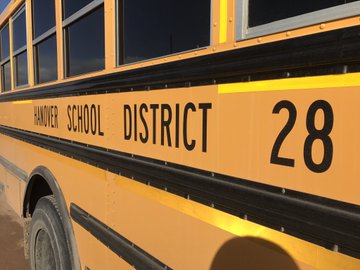
One of the first school districts in the state of Colorado to implement such a policy was in eastern El Paso County in Hanover School District 28.
A decision made in hopes of preventing another school shooting here at home and more than a year later, most people are grateful this was put into place.
"Our school's pretty much a model for school safety," Terry Siewiyumptewa, a parent said.
14 months ago, the rural El Paso County school district made a big change.
"Our staff members, it could be 100 percent, are armed and are here to protect and keep our students safe," Dr. Grant Schmidt, Superintendent for Hanover School District 28 said.
Now, teachers, administrators, custodians and even bus drivers can all volunteer to conceal carry in school if they remain anonymous and go through quarterly training.
"We need safe schools and our school is providing us what we've asked for," Siewiyumptewa said.
Parent, Tammy Siewiyumptewa watched with the rest of the nation as 17 innocent students and staff just lost their lives in another school shooting and she believes it could have been prevented.
"The only way to stop a bad guy with a gun, is a good guy with a gun," she said.
The school board passed the policy because it would take law enforcement more than 30 minutes to respond to a call at Hanover Junior-Senior High School on the very rural, southern edge of El Paso County.
"I would feel safer because I know that there's others that can do something other than one security guard that possibly couldn't even be there at that time," Shane Siewiyumptewa, a junior at Hanover Junior-Senior High School said.
Students we spoke with say it has added an extra level of comfort.
"It's kind of like more eyes to look out for stuff so it's a better safety precaution," he said.
But some teachers argue, guns in schools are not the answer, using the hashtag #ArmMeWith across social media.
Sadly though, Superintendent Dr. Grant Schmidt says, this is the new reality.
"It's definitely a sad state for our society across our country to say that we have to start talking about do we arm staff in our schools," Dr. Schmidt said. "But unfortunately, we do have to problem solve at this point in time in our society."
Dr. Schmidt says he's been getting calls from other school districts across the country all year, wanting to know how they put this into place, asking for guidance, research and other documents to use as a model.

Florida shooting yet another government failure to keep us safe

Florida shooting yet another government failure to keep us safe: Glenn Reynolds

The FBI admitted Friday that it received a detailed tip about accused Florida school shooter Nikloas Cruz in January but failed to follow up and investigate. Time

From the FBI to local law enforcement to the schools, every institution failed. We have more government than ever, but it isn't working.

LINKEDIN 11COMMENTMORE
The chief problem facing America today is the decline of its institutions, coupled with the denial of that decline by the people in charge of its institutions.
The latest example of this problem is the Parkland school shooting in Florida. From the FBI, to local law enforcement, to the schools, everyone failed. There was failure early, there was failure in the middle, and there was failure late. And no one has taken responsibility.
It’s not as if there weren’t warning signs.The Miami Herald has published a chilling list of the times authorities were warned about shooter Nikolas Cruz. Not only was the FBI told about a YouTube post in which Cruz said he wanted to be a professional school shooter (but failed to make the connection to Cruz despite him using his real name in the post), the FBI also received a phone call in which a woman warned that he would “get into a school and just shoot the place up.” She also said that he dressed as a ninja or ISIS member.
And over two years ago, on Feb. 15, 2016, local authorities were warned: “A Broward Sheriff’s Office deputy is told by an anonymous caller that Nikolas Cruz, then 17, had threatened on Instagram to shoot up his school and posted a photo of himself with guns. The information is forwarded to BSO Deputy Scot Peterson, a school resource officer at Marjory Stoneman Douglas High School.”
But nothing was done.
Then, when Cruz finally began shooting up the school, the failures became even more outrageous. A Broward County sheriff’s deputy — weirdly, the same Deputy Scot Peterson who apparently ignored the Instagram threat and also refused to cooperate with investigators — was on the scene, but cowered in the parking lot instead of taking action. As the Herald reports:
A school campus cop heard the gunfire, rushed to the building but never went inside — instead waiting outside for another four agonizing minutes as Cruz continued the slaughter. . . .
On Thursday, Israel said surveillance footage captured the officer’s inaction. Asked what Peterson should have done, Israel said: “Went in. Addressed the killer. Killed the killer.”
Israel added: “I am devastated. Sick to my stomach. He never went in.”
Since the Columbine school shooting that left 12 dead in 1999, cops have been trained not to wait for heavily armed SWAT officers but to enter buildings to find and kill the threat.
Then CNN reported that not only did Peterson stay out of the building, three other deputies hid behind cars instead of intervening. Four armed, trained deputies stayed outside instead of moving forward to protect young people who were being killed essentially in their presence.
It was police from the nearby town of Coral Springs who eventually entered the school, and reportedly are angry at the nonperformance of the Broward deputies. And they should be.
POLICING THE USA: A look at race, justice, media
Despite Broward Sheriff Scott Israel’s all-out attack on the NRA the night before Peterson's inaction became public, this debacle illustrates why so many Americans want to own guns, and aren’t comfortable relying solely on “trained professional law enforcement officers” like Scot Peterson. As Jim Geraghty writes in National Review, “the Parkland shooting is proving to be a colossal cascading failure of both local and federal law enforcement. We know the world has plenty of good cops and good FBI agents. But as American citizens, we never know when we’re going to roll snake-eyes and find that the threat in our midst was missed by cops and that they will not come quickly to our rescue. This is why we need the option to protect ourselves — a right which is in the Constitution. What is the point of changing our laws if the police cannot rise to the challenge of enforcing them?”
In Sheriff Israel’s case — as with Harvey Weinstein's promise to "give the NRA my full attention" after he was exposed as a sexual predator — blaming the NRA is an attempt at deflection, and a way of rallying Democrats to his side. It didn’t work for Weinstein and it’s not likely to work for Israel, either.
But the bigger question is this: We have more government, at all levels, than we’ve ever had before. Yet failures like this keep happening. The FBI, after all, missed the Tsarnaevs (who committed the Boston Marathon bombing) despite being warned by the Russian government. It missed the 9/11 attacks even though it was investigating Zacarias Moussaoui — agents investigating Moussaoui hit so many roadblocks that they joked that Osama bin Laden must have had a mole in the Bureau HQ. And, of course, the San Bernardino shooters and Pulse nightclub shooter Omar Mateen escaped the net as well.
People are being asked to trust the government to keep them safe, when the government is patently unable to do so. And then, when the government fails, it engages in blame-shifting deflection. Why should people listen? Increasingly, they won’t.
Glenn Harlan Reynolds, a University of Tennessee law professor and the author of The New School: How the Information Age Will Save American Education from Itself, is a member of USA TODAY's Board of Contributors. Follow him on Twitter: @instapundit